
-
 Continue reading →: The Red Car Theory: Why You See More of What You Focus On
Have you ever decided that you want to buy a red car, and suddenly red cars seem to be everywhere? You drive to work and notice three. You see one outside a restaurant. Another passes you at a traffic light. Later that evening, you notice another one parked around the…
-
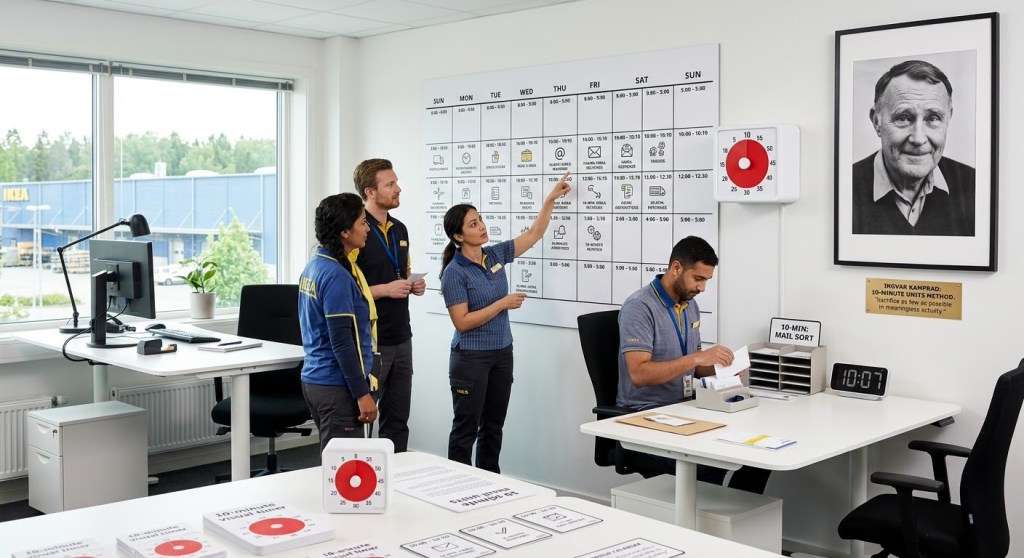 Continue reading →: The Kamprad 10 Minute Method: What Can You Really Do in 10 Minutes?
Ten minutes does not sound like much. You can make coffee. Scroll through your phone. Check a few emails. Watch half a YouTube video. Wait for someone who is running late. Or you can change the direction of your day. That was the idea behind one of the simplest productivity…
-
 Continue reading →: Leadership in the Age of AI: Why Good Leaders Matter More Than Ever
Artificial intelligence can write reports, analyze data, create presentations, summarize meetings and answer questions in seconds. Employees can now access knowledge that once required years of experience or a team of specialists. Work is no longer tied to a single office, and a team can include someone who started their…
-
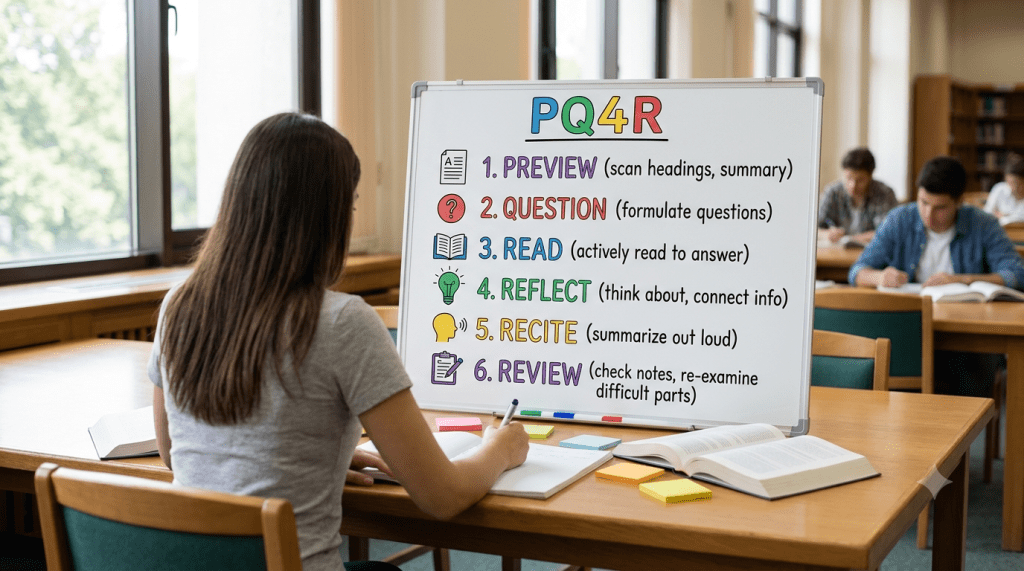 Continue reading →: The PQ4R Method: Turn Reading into Knowledge That Lasts
Have you ever finished an entire chapter, closed the book, and wondered where all the information went? You spent the time. You read every page. You even highlighted the important parts. Yet only a few days later, most of it has disappeared. This is one of the biggest frustrations for…
-
 Continue reading →: The 3Q3R Method: Read Less, Understand More
Have you ever reached the end of a chapter and realized you cannot remember what you just read? Most people have experienced this. Your eyes move across every page, you spend time reading, and it feels like you are making progress. But when someone asks you to explain the topic,…
-
 Continue reading →: The KWL Method: Learn with Purpose Instead of Just Collecting Information
Have you ever finished reading a book, watching a training video, or attending a class and thought, “I learned something… but I cannot really remember what it was”? This happens more often than people realize. We spend hours reading articles, watching tutorials, listening to podcasts, and attending meetings. We consume…
-
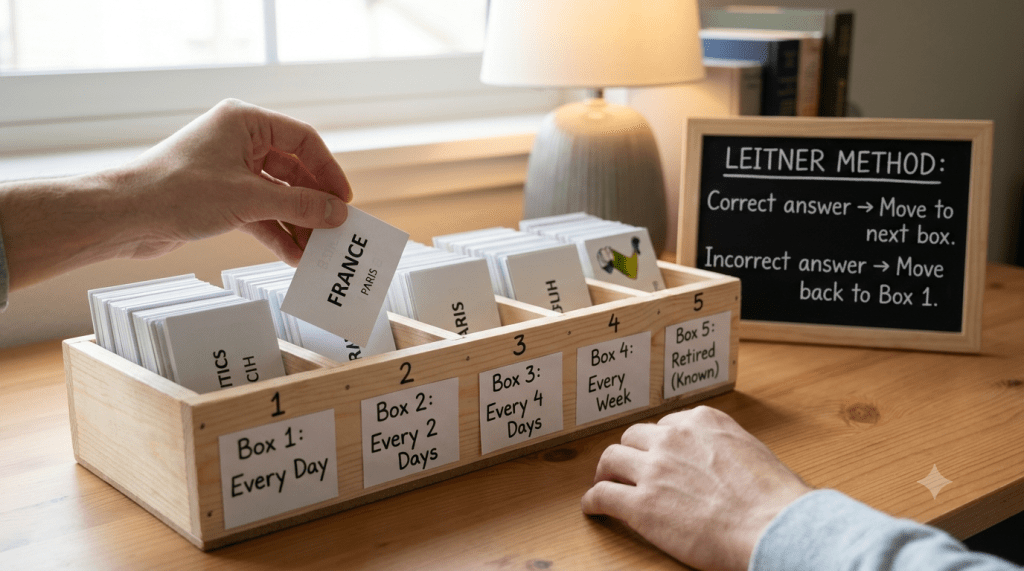 Continue reading →: The Leitner System: Study Less, Remember More
Have you ever spent hours studying for an exam, only to forget most of it a week later? Or perhaps you attended a training course at work, felt confident afterwards, and then struggled to remember the important details when you actually needed them. The problem is usually not that you…
-
 Continue reading →: Learning in the Age of AI: Why Knowing How to Learn Matters More Than Ever
Why should I learn this if AI can answer it in seconds? It is a question more and more people are asking. Students ask it when preparing for exams. Employees ask it when learning new skills. Even parents wonder what their children should learn when Artificial Intelligence can generate answers,…
-
 Continue reading →: Learning Smarter: Why Learning Methods Matter More Than Ever
Have you ever read a chapter, watched a video, attended a meeting, and then realized a few days later that you remember almost nothing? You are not alone. Many people spend hours learning, but very little time thinking about how they learn. They focus on collecting information instead of understanding…
-
 Continue reading →: The Gender Pay Gap: When Equal Work Does Not Mean Equal Pay
You finish the same project, meet the same targets, and carry the same responsibility as your colleague. At the end of the month, your pay is different. You may not even know it at first, but over time, the gap becomes clear. It is not about one moment. It is…
This is Roya Bloom!
Your Day, Your Way, Our Planner

Questions, suggestions, or just want to say hello? We’d love to hear from you! Reach out to us using the information below, and our team will get back to you as soon as possible. Let’s make things happen together!
Let’s connect
Join the fun!
Stay updated with our latest productivity hacks by joining our newsletter.
